
Everyone clamors for AI, but few know precisely what to buy. It is a chaotic market filled with loud promises of instant automation, yet actual implementation often stalls painfully. The gap between slick marketing hype and messy operational reality is vast, frequently leaving competent leaders frustrated with expensive shelfware. Real success requires looking past flashy avatars to find tools that integrate seamlessly with your current data stack.
It is time to strip away the jargon and focus on verifiable capabilities that genuinely drive revenue. You deserve a tool that works as hard as your best employee, not one that simply adds more noise to your daily operations.

Why Do Businesses Struggle With Initial AI Adoption?
The single biggest misconception destroying AI projects is the belief that these platforms are "plug-and-play." They are not. You are essentially hiring an eager, incredibly fast junior employee who knows absolutely nothing about your specific business. Companies often fail because they dump raw, unstructured data into a sophisticated engine and expect perfect output immediately. When the bot inevitably gives a bizarre answer to a high-value client, trust evaporates, and the project is abandoned.
Success comes entirely from treating implementation as an ongoing curriculum rather than a one-time software installation. You must continuously refine the platform's knowledge base and conversational flows based on these real-world interactions. The platforms that truly succeed long-term are those offering intuitive, no-code tools for this ongoing training, allowing your customer support managers, not just your IT engineers, to correct the bot's behavior instantly when it makes a mistake.
What Are the Non-Negotiables for a Modern Platform?
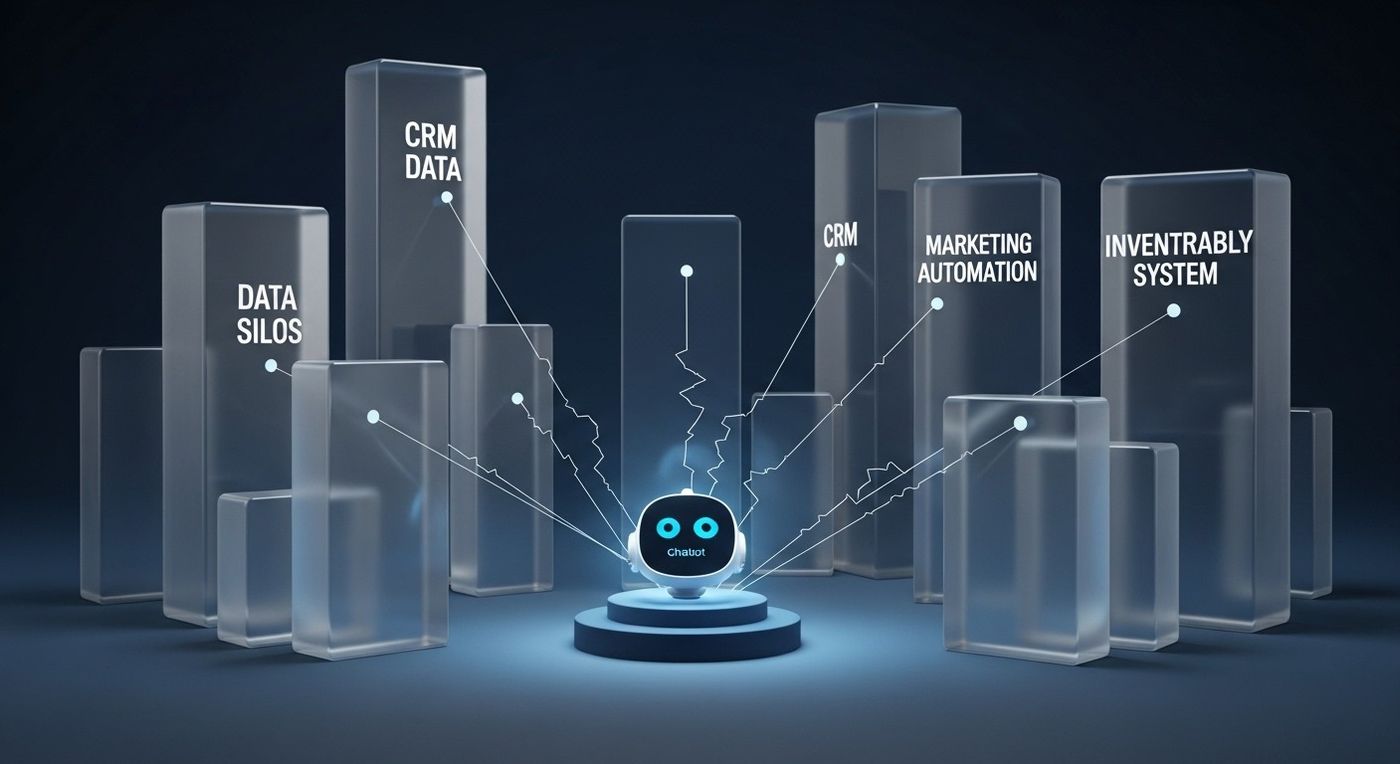
Do not get distracted by shiny features until your core infrastructure requirements are met. The absolute non-negotiable is robust, native integration capability. If a platform cannot talk fluidly with your CRM, marketing automation, and inventory systems right out of the box, it is actively harmful. It creates new data silos rather than removing them, forcing your human team to manually bridge gaps that the AI was supposed to handle.
Security is the other pillar often taken for granted until disaster strikes. When you are handling sensitive customer data like credit card numbers or health information, enterprise-grade encryption and verified compliance certifications (like SOC 2 Type II or GDPR adherence) are mandatory. Your platform choice must guarantee that operational efficiency never comes at the cost of hard-earned customer trust.
How Do You Distinguish True Intelligence From Scripted Responses?
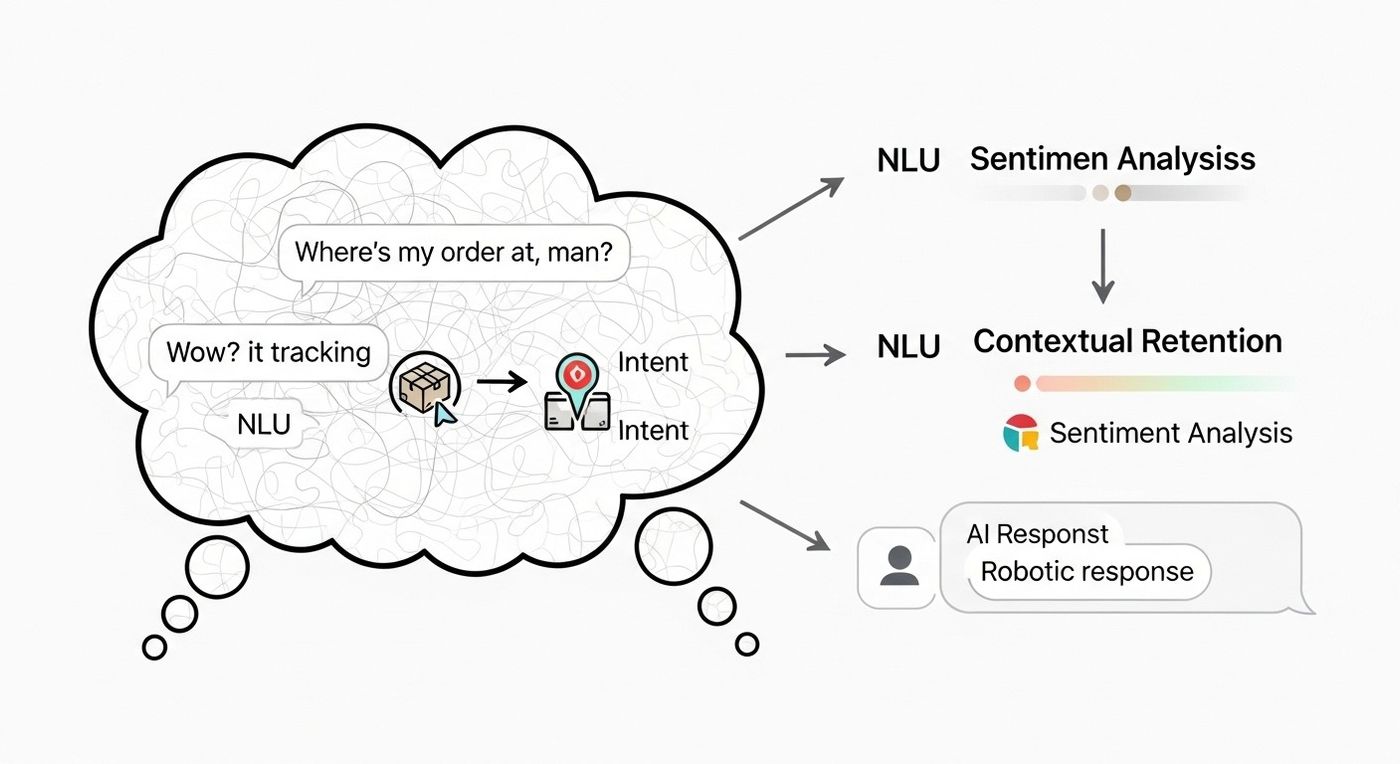
True intelligence isn't about having a pre-written answer for every possible question; it's about understanding intent even when the user phrases it poorly. To separate the real deal from basic decision trees, you must heavily scrutinize three specific technical layers that power the conversational experience:
Natural Language Understanding (NLU)
NLU is the bot's ability to grasp human intent despite typos, slang, regionalisms, or complex sentence structures. Basic bots fail when a user deviates even slightly from the expected script. Superior platforms use advanced NLU engines to parse meaning from messy, real-world inputs, ensuring customers don't get stuck in those frustrating loops of constantly repeating themselves to a machine that won't listen.
Contextual Retention
This is the conversation's active short-term memory. If a user says "I want to buy shoes" and then follows up with "show me red ones," the bot must instantly know "red ones" refers back to the shoes. Weak platforms treat every new sentence as a blank slate. Strong ones maintain a running state of variables to provide a coherent, human-like dialogue flow across the entire session.
Sentiment Analysis
Beyond just understanding the words, an intelligent platform must detect the underlying emotion in the user's text. Is the customer becoming visibly angry or sarcastic? Good AI spots rising frustration levels and automatically routes these sensitive issues to experienced human agents before lasting brand damage occurs. This turns a potentially negative experience into a demonstration of proactive, empathetic customer care that builds long-term loyalty.
Why Do Traditional ROI Metrics Mislead Leadership?
Many organizations obsess over chatbot-specific vanity metrics and get a false sense of success, while ignoring the impact on the broader customer journey. Consider a mid-sized fintech company that deployed a bot to deflect Tier 1 support tickets. In the first month, their deflection rate hit 40%, and leadership celebrated the massive cost savings.
However, they failed to notice that their Net Promoter Score (NPS) among high-net-worth individuals had plummeted. These premium clients were getting trapped by the bot when they had urgent, complex fund transfer issues that required human intervention. The bot was effectively saving the company $5 per interaction while simultaneously costing them $50,000 in churned lifetime value from frustrated top-tier clients.
The lesson here is clear: never measure "Deflection Rate" in isolation. You must pair it with "Resolution Rate" and customer sentiment scores. A bot that stops a customer from reaching you by annoying them into giving up is not a win; it is a silent revenue killer.
Where Does the Real Value Lie Beyond Customer Support?
Limiting AI solely to answering Frequently Asked Questions is leaving massive amounts of money on the table. The most powerful deployments happening right now are in proactive sales and internal operations. Imagine a bot that notices a user lingering on your high-tier pricing page for more than sixty seconds and proactively interjects with a comparative guide or a limited-time discount code. This shifts the technology from a passive cost center to a direct, measurable revenue generator.
Internally, these platforms are revolutionizing HR by handling onboarding paperwork instantly. This frees up your human HR professionals to focus on complex personnel issues and culture building rather than chasing down tax forms. The real value multiplier is highest when the platform is applied horizontally across multiple departments rather than vertically in just one.
When Is It Time to Switch From a Basic Bot to an Enterprise Solution?
Think of your initial chatbot experiment like a bicycle: it is affordable, easy to operate, and fine for getting around the neighborhood. But as your customer volume grows, you are suddenly trying to haul interstate freight on that bicycle. Things will inevitably break. You must recognize the signs of outgrowing your starter tool before it damages your market reputation.
If you notice frequent downtimes during traffic spikes, an inability to handle multi-turn complex conversations, or a lack of detailed analytics to diagnose failure points, it is time to upgrade. Enterprise solutions are the semi-trucks you need for heavy lifting, offering the reliability, scale, and advanced routing necessary for maturing operations.
Who Are the Current Market Leaders and Why Do They Stand Out?
The "best" platform depends entirely on your specific maturity level and existing technical infrastructure. While the market is flooded with thousands of options, a few have consistently proven their ability to deliver genuine, verifiable ROI for serious businesses. Let's examine the distinct strengths and ideal use cases for the platforms that consistently separate themselves from the rest of the pack:
HubSpot (The All-in-One Choice)
For businesses already deep in an inbound methodology, HubSpot offers unmatched native integration. It isn't just a standalone bot; it is a direct extension of your entire CRM. The massive advantage here is context; every single bot interaction is immediately logged against the customer's master record, making it ideal for sales-driven organizations that need seamless handoffs between automated bots and human sales representatives.
Intercom (The Engagement Specialist)
Intercom excels at proactive engagement rather than just reactive support. Its primary strength lies in its incredibly user-friendly interfaces and highly customizable messenger workflows. It is particularly strong for SaaS companies looking to automatically onboard new users or drive specific feature adoption through targeted, timely in-app messages that feel genuinely helpful rather than intrusive to the user experience.
Kore.ai (The Enterprise Heavyweight)
When you need raw power for complex global operations, Kore.ai stands firmly apart. It is built to handle massive transactional volume and offers deep customization for highly regulated industries such as banking and healthcare. Its focus is on superior, enterprise-grade NLP and rigorous security controls, making it the go-to choice for organizations where strict data governance is just as important as conversational ability.
VeloceAI: The Engine for Real-World ROI
This isn't just theory, it's our daily practice. We are the team at VeloceAI, and we built our platform for leaders who are tired of hype and demand verifiable results.
While basic bots create new data silos, VeloceAI is engineered for deep integration, becoming a true extension of your existing CRM and data stack. We obsess over the "non-negotiables" that separate failure from success, from advanced NLU that understands true customer intent to the contextual retention that prevents frustrating loops.
If you're ready to move past "shelfware" and deploy an enterprise-grade AI partner that focuses on resolution rates, not just deflection, your next step is here.
See the Platform, Not a Pitch: Schedule a strategic demo with VeloceAI to see how we handle your most complex use cases.
Frequently Asked Questions
How long does it realistically take to implement a functional AI solution?
Forget the marketing claims of "up in an hour." A functional, well-trained business bot typically requires 4-6 weeks for initial data feeding, rigorous scenario testing, and refinement before it is truly ready for live customer-facing interaction.
Will AI chatbots eventually replace my entire human support team?
Absolutely not. They replace repetitive tasks, not people. The ultimate goal is to filter out the high-volume Tier 1 queries so your human agents can focus entirely on complex, emotionally charged issues that require genuine empathy.
What is the biggest hidden operational cost of these platforms?
Ongoing maintenance. Most companies budget for the software subscription but completely forget the need for a dedicated human "bot manager" who must constantly review conversation logs, identify failure points, and retrain the AI on new edge cases.
How should I measure the true success of my chatbot implementation?
You must look beyond vanity metrics like "number of conversations." The only metrics that matter are "Goal Completion Rate" (did the user actually get their answer without escalating?) and "Customer Effort Score" (how hard was it for them to get that answer?).
